A wage statement may list a deduction as a uniform charge, shortage, equipment cost or another short label. That label tells you what the employer calls it. It does not by itself establish that the deduction is allowed, how it was calculated, or which legal restrictions apply. A useful inquiry asks about the underlying expense and the pay period affected.
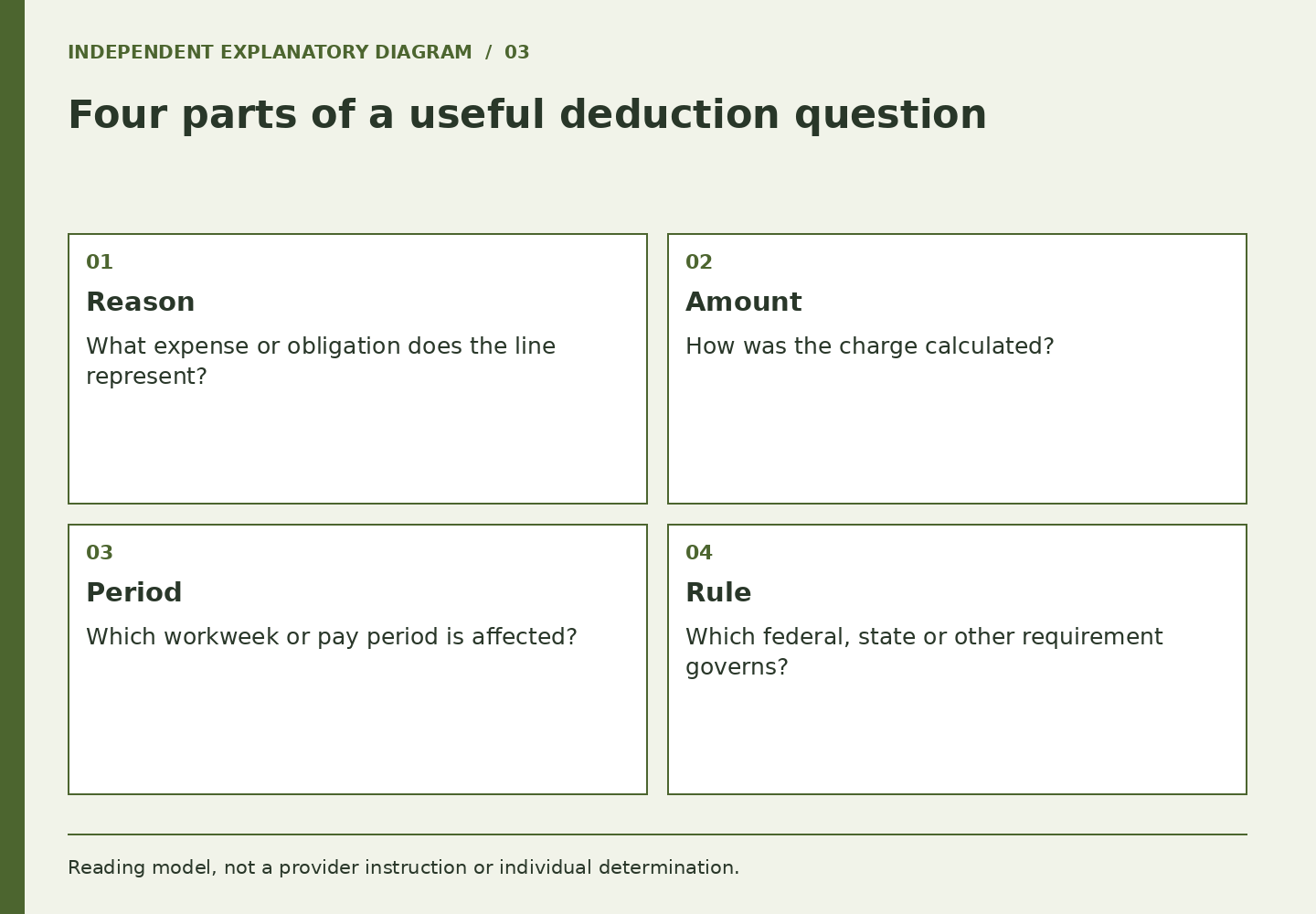
DOL Fact Sheet 16 explains federal restrictions on shifting certain employer-benefit costs to employees when doing so would reduce required minimum wage or overtime. State rules can impose additional limits. The absence of a federal floor problem does not establish that every deduction is permitted under every applicable rule or agreement.
Identify the event behind the line
Ask what the amount represents, when the expense arose, and how the amount was assigned to you. Was it a recurring deduction, a single charge, or a request to repay the employer separately? Keep the categories open until you have the explanation. A line described as a deduction might relate to taxes or an authorized benefit rather than the employer-cost issue discussed here.
This guide does not evaluate tax withholding, garnishment orders or individual benefit elections. If one of those is involved, tell the appropriate reviewer which kind of item appears. Treating every reduction in take-home pay as the same legal problem can send the inquiry toward the wrong rule and away from the information needed.
Do not assume consent answers every question
In a fictional example, a worker signs an equipment receipt and later sees a wage reduction after an item is damaged. The receipt, the deduction and the applicable wage rule are separate facts. A signature may be relevant, but it is not a reason for this publication to decide that all legal restrictions disappear. Nor does a worker’s disagreement automatically prove the deduction unlawful.
Another fictional worker is asked to hand over cash for a shortage instead of having it withheld from pay. That method should be described accurately to an agency or adviser. Moving the request outside a wage statement does not make the underlying employer-cost question unimportant. Preserve the request if you lawfully have it, and do not alter or conceal the amount paid.
Ask which period and rule were used
A concrete initial question is: “What is the basis for this deduction, how was the amount calculated, and which workweek or pay period does it affect?” If the response points to a policy, ask for the relevant current provision. You are seeking an explanation, not giving retroactive consent or authorizing another deduction by asking.
Do not attempt to decide the legal result from the remaining card balance. Wages, deductions and later account activity are different records. If the issue is consequential, recurring or connected with retaliation, get timely guidance from a relevant labor authority or qualified adviser. Read wage floors and promised pay for the broader compensation question and timing and legal help before relying on an informal promise that everything can be reviewed later. No amount or entitlement is calculated here.
Sources and reading boundaries
Sources checked October 7, 2026. This is a review date, not a policy effective date or an account test.
- U.S. DOL: Fact Sheet 16, Wage Deductions: Employer-benefit uniform/tool/loss costs may not reduce required federal minimum wage or overtime; state restrictions may be greater. Review basis: Official source text reviewed through search-index retrieval; direct navigation may be unavailable.
- U.S. DOL: Minimum Wage: Higher applicable federal or state floor; limits of FLSA collection of promised amounts above its protections. No nationwide local-rate determination. Review basis: Official source text reviewed through search-index retrieval; direct navigation may be unavailable.